October 20, 2026
Dominican Republic local SIM: Claro vs Altice vs Viva, from Punta Cana to Samaná
Claro, Altice and Viva prepaid data packages read on 20 October 2026: the ID rule, Punta Cana airport, coverage in Samaná and real caps of unlimited eSIMs.
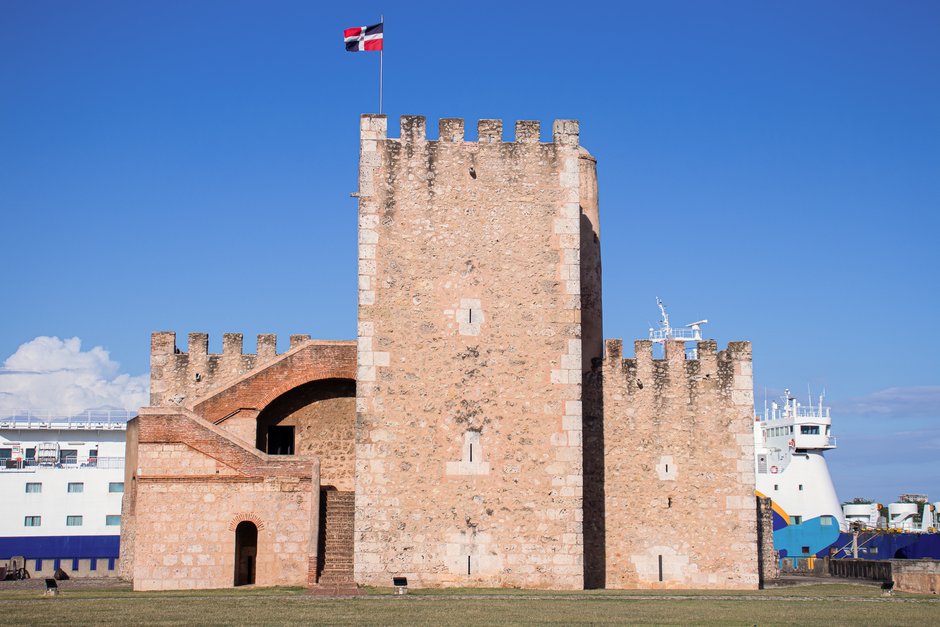
Photo: Julio Loaiza Miranda — Pexels
Part of our Dominican Republic eSIM guide: all articles and key facts →
A Dominican Republic local SIM from Claro, Altice or Viva costs a few dollars for a week of data, much less than any travel eSIM, but you need a passport, a shop and a little Spanish. We read the three operators' prepaid pages on 20 October 2026, the regulator's identity rule and the crowdsourced coverage maps for Punta Cana, Samaná and Santo Domingo.
Key takeaways
- On 20 October 2026, Claro sold 12 GB for 7 days for RD$250 (about US$4.06) and Altice 10 GB for 5 days for RD$200 (about US$3.25), far less per gigabyte than any travel eSIM; neither operator published a tourist plan, and a new prepaid line must be registered with an official document such as a passport.
- Claro holds 63.7% of Dominican mobile lines, Altice 33.5% and Viva 2.8% (INDOTEL figures for the end of 2025). On nPerf's crowdsourced maps, Claro and Altice both had 5G tests around Punta Cana and Santo Domingo, while Viva had no 5G result and no test at all in Las Terrenas.
- "Unlimited" Dominican eSIMs are not all full speed: Airalo and aloSIM drop to 1 Mbps after 3 GB a day, Holafly and Yesim publish no figure but warn that speed may be reduced, and Claro's own packages fall to 384 Kbps once the allowance is used.
Claro, Altice or Viva: which local SIM should a tourist buy?
Claro or Altice: both sell cheap prepaid data packages and both show 5G test results around Punta Cana, while Viva is a much smaller network with far fewer measurements there. The country has three mobile operators. Claro, the former Codetel, is the largest telecommunications company in the country; Altice Dominicana, the former Tricom, is the second; Viva is the brand of Trilogy Dominicana.
Figures from the regulator INDOTEL, published by the business news site elDinero on 18 June 2026, gave Claro 63.7% of the 11.0 million mobile lines at the end of 2025, Altice 33.5% and Viva 2.8%. The same figures show Viva losing mobile internet customers over 2025, down to 312,952 subscriptions.
None of the three operators publishes a tourist plan on its website. A visitor buys an ordinary prepaid line and adds a data package, exactly as a local customer does. The choice between Claro and Altice therefore comes down to price per gigabyte, the shop nearest to your hotel and the network your travel companions use.
How much do Claro and Altice data packages cost?
Between RD$50 and RD$250 for 1 to 7 days, with 1 GB to 12 GB of data, taxes included. The tables below list the packages published on the operators' own pages on 20 October 2026. Prices are in Dominican pesos; the Central Bank of the Dominican Republic's selling rate on 19 October 2026 was RD$61.62 for one US dollar.
| Claro package (prepaid) | Validity | Data at full speed | Price |
|---|---|---|---|
| Internet Libre | 1 day | 1 GB, then 384 Kbps | RD$50 (about US$0.81) |
| Internet Libre | 3 days | 3 GB, then 384 Kbps | RD$100 |
| Internet Libre Plus | 3 days | 5 GB, then 384 Kbps | RD$120 |
| Internet Libre | 5 days | 6 GB, then 384 Kbps | RD$160 |
| Internet Libre Plus | 5 days | 8 GB, then 384 Kbps | RD$170 |
| Internet Libre Plus | 7 days | 12 GB, then 384 Kbps | RD$250 (about US$4.06) |
Claro's prepaid internet packages page says they are bought in the Mi Claro app or by dialling *112#. It also lists hourly packages, from 250 MB for one hour at RD$15 to 750 MB for seven hours at RD$40. Claro's prepaid page adds a weekly bonus of "up to 20GB + 50 minutes" for prepaid customers, without explaining on that page who qualifies.
| Altice package (prepaid) | Validity | Data | Price |
|---|---|---|---|
| Data Libre | 1 day | 1 GB | RD$50 |
| Data Libre | 3 days | 3 GB | RD$100 |
| Data Libre | 5 days | 6 GB | RD$160 |
| Data Libre Alta Gama | 1 day | 2.5 GB | RD$70 |
| Data Libre Alta Gama | 3 days | 6 GB | RD$140 |
| Data Libre Alta Gama | 5 days | 10 GB | RD$200 (about US$3.25) |
Altice's Paqueticos Data Libre page sells these packages through the Mi Altice app or by dialling #100#, and describes them as data "to browse at maximum speed"; it does not say what happens once the allowance is used. Altice publishes no 7-day data package on that page, so a week means two packages, for example two 5-day Alta Gama packages at RD$400 in total for 20 GB.
The standard 1, 3 and 5-day packages cost the same at both operators: RD$50, RD$100 and RD$160. Claro's Libre Plus range gives more data for a little more money, and is the only Claro or Altice package with a 7-day validity.
What does Viva offer?
Viva sells prepaid data packages "from RD$20" and social media packages from RD$25 a day, but its page does not list the data packages with their prices in readable text. Viva's prepaid page says, in Spanish, that you can activate a line "with your ID card or passport if you are a foreigner at any Viva point" (our translation), without a credit check or contract.
Viva publishes its fair usage rules in detail on the same page. Its daily internet packages for prepaid lines have a cap of 1 GB for 1 day, 3 GB for 3 days, 6 GB for 7 days and 30 GB for 30 days. Beyond that, speed drops to between 384 Kbps and 1 Mbps depending on the package, and to 256 Kbps after a second threshold, for example 12 GB on a 7-day package.
The network is the real issue for a visitor. On nPerf's maps, described below, Viva had no 5G result in Santo Domingo or Punta Cana, a stretch with no signal on the motorway to Punta Cana, a single test in the town of Samaná and none in Las Terrenas.
What do you need to buy a SIM in the Dominican Republic?
An official identity document: for a visitor, that means a passport. In Resolution 064-2025 of June 2025, INDOTEL gave the mobile operators 30 days to validate the identity of the users of active prepaid lines, and its announcement of the resolution states that operators "must identify each user with an official document, such as an identity card, passport or residence card" (our translation from Spanish).
The same announcement quotes an estimate that about 400,000 prepaid lines are sold each month, 85% of them informally in the street, and says that lines whose holder is not validated will be suspended for up to two months and then cancelled. Buy from an operator shop or an authorised dealer and bring your passport.
A local line also needs a phone that accepts other networks. If your phone came from a carrier, read do you need an unlocked phone for a travel eSIM before you queue: the same lock blocks a Dominican SIM.
Can you buy a SIM at Punta Cana airport?
We could not confirm it: none of the operator pages we read mentions a shop inside Punta Cana airport. Travel blogs disagree on whether there is a mobile phone counter in the arrivals hall at Punta Cana International Airport (PUJ), the busiest in the country, and we found no page from Claro, Altice or Viva that settles the question.
Altice's website menu links to "+500 tiendas", its list of service shops, and Viva says its lines can be activated "at any Viva point". In practice, plan on a shop in town rather than at the airport, and use the hotel Wi-Fi or a small travel eSIM for the first hours. Our comparison of the best Dominican Republic eSIMs lists plans from €4.99 (1 GB valid 7 days at Orange Travel), enough for the transfer and the first days.
Can a tourist get a local eSIM from Claro or Altice?
Both offer eSIM, but through a shop or, at Claro, its online store; we found no tourist eSIM sold online by either. Claro's eSIM page answers "Does it apply to prepaid plans?" with "Yes, it applies to Prepaid, Postpaid and Control mobile plans" (our translation), and explains that customers can swap a SIM for an eSIM in person at a Claro customer service centre or through the Claro online store. It adds that the eSIM is free, including for new lines.
That process is designed for residents moving an existing number. A visitor still has to register a line with a passport, so the in-store visit remains. Altice's eSIM page tells existing customers to go to their nearest Altice shop, and anyone who wants to become a customer to visit a shop or call. Nothing we read suggests that either operator sells a prepaid eSIM to foreigners entirely online.
How good is coverage in Punta Cana, Samaná and Santo Domingo?
In Punta Cana and Santo Domingo, Claro and Altice users have recorded mostly 5G and 4G along the main roads; on the Samaná Peninsula, tests thin out quickly outside the towns. No independent speed ranking was available: we found no nPerf barometer and no Opensignal report for the Dominican Republic on 20 October 2026. The operators' own figures are marketing: Claro says its 5G reaches "97% of the provinces" (our translation), and Altice's coverage map page shows 5G at 42%, 4G at 97.60% and 3G at 98.80%, measured outdoors, without saying whether the percentages refer to population or territory.
The figures below come from nPerf's crowdsourced coverage maps, which plot "tests carried out by users of the nPerf app" over the last two years. They show where people measured a signal, not guaranteed coverage: a blank area can mean no signal or simply no test. We read them on 20 October 2026.
Punta Cana and Bávaro
Claro had 5G results along the main roads of Bávaro and Verón, around the airport and Residencial Punta Cana, with 4G and 4G+ along the Autopista del Coral. Altice also had 5G on the Verón–Bávaro road and around the airport, with 4G along the motorway and the northern coast road. Viva had far fewer tests: 4G on a few roads, 3G on the Carretera Bávaro and a short stretch with no signal on the Autopista del Coral.
Samaná and Las Terrenas
In the town of Samaná, Claro users recorded 5G and 4G+, with 3G and 4G along the coast road to the east and a few points without signal on the road to El Limón. Altice had fewer tests in town, mostly 4G and 4G+. In Las Terrenas, Claro showed 4G and 4G+ in the centre and Altice mostly 4G, both with scattered 3G around it; Viva had no test at all. Inland, Claro had only a handful of points west of Samaná, some of them with no signal, and nobody had recorded a test across the hilly eastern half of the peninsula on any network, and Holafly's own page warns that coverage may be weaker in "the Samaná Peninsula" and "Los Haitises National Park".
Santo Domingo
Both Claro and Altice showed dense 5G results across the city centre and along the motorways, with 4G and 4G+ on the outskirts. Viva showed 4G+ and 4G in the centre and 3G on the edges, without 5G.
Unlimited eSIMs for the Dominican Republic: the real caps
Many "unlimited" plans are unlimited in volume only: Airalo and aloSIM publish a daily allowance after which the speed drops, and the others publish no figure. These are the rules each seller published on 20 October 2026:
- Airalo (Altice network): "Lower speed rate of 1 Mbps after 3 GB usage per day", from €17 for 3 days to €89.50 for 30 days.
- aloSIM (Claro network): "You get 3 GB of high-speed data every day. If that limit is reached, your data speed will drop to 1 Mbps until the next day", from $20.50 for 3 days to $97 for 30 days, or €19 to €90 when paid in euros.
- Holafly (Altice network): no daily full-speed figure published; its FAQ says a fair usage policy may be applied "for no more than one (1) day", and hotspot sharing is limited to 1 GB a day. Prices run from €6.90 for 1 day to €94.90 for 30 days.
- Orange Travel (Altice, Claro and Viva): unlimited plans for 5, 10 and 15 days at €19.99, €35.99 and €50.99; no cap shown on the offer page.
- Yesim (Claro network): unlimited plans for 1, 7 and 15 days at €14, €48 and €85, with no figure shown; its linked fair usage policy says that if you exceed the partner network's high-speed allowance "you might notice slower speeds"; hotspot "depends on operator".
For comparison, Claro's own 7-day Libre Plus package gives 12 GB at full speed and then 384 Kbps, slower than the 1 Mbps fallback of Airalo and aloSIM. At 1 Mbps, maps, messaging and voice calls keep working; video streaming and photo backups do not. If you upload a lot of video from the beach, a large fixed plan or a local package is the safer choice.
Local SIM or travel eSIM: which costs less?
The local SIM is far cheaper per gigabyte; the travel eSIM saves the passport check, the shop visit and the risk of arriving with no data. The table compares a one-week stay, on prices read on 20 October 2026.
| Option for 7 days | Data | Price | What it takes |
|---|---|---|---|
| Claro Internet Libre Plus | 12 GB, then 384 Kbps | RD$250 (about US$4.06) | Prepaid line registered with a passport, a shop |
| Altice, two 5-day Alta Gama packages | 2 × 10 GB | RD$400 (about US$6.49) | Prepaid line registered with a passport, a shop |
| Airalo unlimited | 3 GB a day, then 1 Mbps | €34.50 | Installed at home, works on landing |
| Orange Travel 3 GB | 3 GB | €13.99 | Installed at home, works on landing |
A local line also gives you a Dominican number, useful for calling a restaurant, a tour operator or a driver; none of the travel eSIMs we compared includes one. On the other hand, the price of the line itself and any activation charge are not shown next to the packages on the operators' pages, so ask in the shop.
You can also combine the two: a small eSIM for the first day, then a Claro or Altice line once they pass a shop in town. If you keep your home SIM active too, read what to check about roaming charges before you travel so that it does not start roaming by mistake.
A checklist before you fly
Check your phone, decide between a local SIM and an eSIM, and pack your passport in your hand luggage. A few minutes at home avoids most problems on arrival:
- Compatibility: look up your model on our list of eSIM-compatible phones, for example the iPhone 16 range or the Pixel 10 range, and run our guide on checking eSIM support without installing anything.
- EID: some sellers ask for it; here is where to find the EID number on Samsung, Pixel and iPhone.
- Installation problems: if the line stays on "Activating", see our fixes for an eSIM stuck on activating; if it does not connect, try 10 fixes for a travel eSIM not working abroad.
- Two lines: to keep your home number for bank codes while using local data, read running two eSIMs at the same time.
How we checked
We read the prepaid data pages of Claro, Altice and Viva, Claro's eSIM page, Altice's coverage map page and INDOTEL's announcement of Resolution 064-2025 on 20 October 2026. Market shares come from INDOTEL figures for the end of 2025 as published by elDinero; dollar equivalents use the Central Bank of the Dominican Republic's selling rate of RD$61.62 for one US dollar on 19 October 2026.
Coverage observations come from nPerf's crowdsourced maps for Punta Cana, Samaná, Las Terrenas and Santo Domingo, and travel eSIM caps from each seller's own page. We did not buy a SIM or measure speeds in the Dominican Republic, and we found no primary source on resort Wi-Fi, so this guide says nothing about it. Prices change often: check the operator's page or ask in the shop before you buy.
Frequently Asked Questions
Which is better in the Dominican Republic, Claro or Altice?expand_more
Do I need a passport to buy a SIM card in the Dominican Republic?expand_more
Can I buy a SIM card at Punta Cana airport?expand_more
How much is a SIM card in the Dominican Republic?expand_more
Is there a truly unlimited eSIM for the Dominican Republic?expand_more
Check your own phone in seconds
The free eSIM Check app reads your device's real hardware capabilities — no guesswork.
Get it on Google Play