September 14, 2026
Maroc Telecom, Orange or inwi: which network for your eSIM?
Your Morocco eSIM roams on one of three networks. How Maroc Telecom, Orange Maroc and inwi compare on 5G, rural 4G and desert coverage.
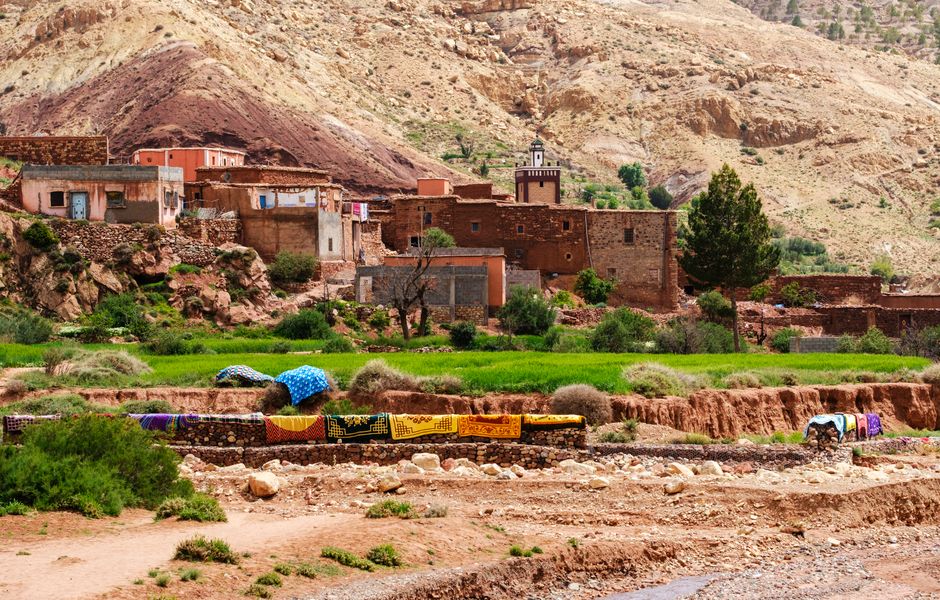
Photo: pierre matile — Pexels
Part of our Morocco eSIM guide: all articles and key facts →
Every travel eSIM sold for Morocco runs on somebody else's masts. There are only three sets of masts in the country — Maroc Telecom, Orange Maroc and inwi — so the real question behind "which eSIM is best" is usually "which network does it use, and is that the right one for where I am going".
The three networks
Maroc Telecom (IAM)
The incumbent, and the widest footprint. It inherited the national infrastructure and owns the largest share of the country's radio sites. Opensignal's report on January to March 2026 named it Morocco's best network, with the fastest average download (27.5 Mbps) and the best coverage score (9.2 out of 10). It also took the largest 5G spectrum block in the July 2025 licence tender — 120 MHz, against 70 MHz each for its two rivals.
Orange Maroc
Strong in the cities and on the main corridors. It had the largest share of Morocco's mobile lines at the end of March 2026 (34.38%, ANRT), came first on overall score in the nPerf 2025 barometer and, in Opensignal's January to March 2026 report, spent the most time on 5G (51.2% for 5G users). The same report gave it the lowest coverage score of the three (7.8 out of 10), and in the ANRT's May 2026 tests in Marrakech it was below the city average for download speed.
inwi
The youngest of the three, and no longer a small one: at the end of March 2026 it held 34.04% of Morocco's mobile lines, just behind Orange (34.38%) and ahead of Maroc Telecom (31.58%), and 43.37% of mobile internet subscriptions, according to the ANRT. It trails the other two on measured speed in the nPerf 2025 barometer (31.37 Mbps average download, against 50.65 for Maroc Telecom and 37.61 for Orange), but Opensignal's January to March 2026 report gave it the best reliability and video scores. It sells prepaid eSIM packs in its shops and runs a page aimed at visitors and Moroccans abroad.
What changed in November 2025
Morocco entered the 5G era on schedule. The ANRT announced the winners on 25 July 2025 — Maroc Telecom taking 120 MHz for 900 million dirhams, Orange Maroc and inwi 70 MHz each for 600 million, 2.1 billion dirhams in total — the licences were granted by decree on 30 October 2025, and commercial service launched on 7 November 2025, timed to the African Cup of Nations.
The first phase covered the big cities and their airports, including the AFCON host cities: Casablanca, Rabat, Marrakech, Tangier, Fez and Agadir. The licence terms set a floor of 25% of the population by the end of 2026 and 70% by the end of 2030, and the three winners committed to going further, to 45% and 85%, so the map will keep filling in — but for a 2026 trip, treat 5G as a city feature and 4G as the thing that actually carries your holiday. At the end of March 2026, 5G accounted for 8.4% of mobile internet subscriptions, according to the ANRT.
Which network suits which trip
| Your trip | What matters | Best fit |
|---|---|---|
| Marrakech, Casablanca, Rabat, Tangier | Urban speed, 5G availability | Any of the three; Orange spends the most time on 5G (Opensignal, January–March 2026), but was below average for download speed in the ANRT's May 2026 tests in Marrakech |
| Atlas Mountains, valleys, mountain villages | Reach rather than speed | Maroc Telecom, which owns the largest share of the country's radio sites |
| Sahara, Merzouga, Zagora, southern routes | Coverage on long empty roads | Maroc Telecom |
| Coastal towns, Agadir, Essaouira | General 4G quality | All three are workable |
| Long road trip across regions | Consistency, not peak speed | Maroc Telecom or inwi |
Do not over-plan this. On the routes tourists actually take — cities, the coast, the main desert circuits — all three networks work: in the ANRT's 2024 tests across 71 cities, none of the three was far from the local average in almost every city. The differences show up on side roads, in valleys and at the far end of long transfers.
How to find out which network your eSIM uses
Providers do not always say on the sales page, and some hold agreements with more than one operator. Three ways to know:
- Read the plan details. Some providers name the host network; others state only that the plan uses local operators' 4G and 5G networks.
- Look at the phone once you land. The operator name appears in the status bar and in network settings — IAM, Maroc Telecom, Orange or inwi.
- Try manual selection. If your plan has more than one host agreement, selecting an operator by hand in network settings can move you to a network with better local coverage. This is also the standard fix when a profile registers slowly on arrival.
The plans linked from our menu, at eSIM Maroc, run on Moroccan operators' own 4G and 5G networks — the same masts, not a reseller's separate infrastructure. Our price and plan guide covers what that costs.
Coverage is only half the equation
A perfect network cannot help a phone that will not take a profile. An eSIM needs an eUICC chip and a handset free of carrier locks, and neither is guaranteed by the model name alone — the same model can ship with eSIM in Europe and without it elsewhere, which we cover in why regional variants differ.
Recent flagships are safe ground: Galaxy S, Pixel, iPhone. Mid-range is where it gets interesting, and where our supported devices list earns its keep.
Practical advice for the Atlas and the desert
- Download offline maps for the whole region before leaving the city. No network is a substitute.
- Expect gaps on mountain pistes and in gorges, whatever the coverage map claims. Terrain wins.
- Tell someone your route if you are driving remote roads. Data coverage is not emergency coverage.
- In a group, put different networks on different phones. Two networks in a car is the cheapest redundancy there is.
- Battery drains faster at the edge of coverage, because the radio keeps searching. Carry a power bank.
Whatever network you end up on, check the handset first. The free eSIM Check app on Android, listed on Google Play as Esim Compatibility Checker, reads your device's real hardware capabilities, which is a better basis for a decision than a spec sheet written for another market.
Frequently Asked Questions
Which Moroccan network has the best coverage?expand_more
Can I choose which network my travel eSIM uses?expand_more
Is 5G worth paying extra for in Morocco?expand_more
Will I have signal in the Sahara?expand_more
Check your own phone in seconds
The free eSIM Check app reads your device's real hardware capabilities — no guesswork.
Get it on Google Play